


AI Assistants, CI/CD, and Modern Tech Stack: Project Practicum Defenses Successfully Concluded
- 7.6.2026
- |
- Uncategorized
From an initial idea to a full-scale release with a configured infrastructure—this is the journey completed by second-year Software Engineering students during the spring semester. As part of the "Project Practicum" course (lecturers Associate Professor Iryna Afanasieva and Senior Lecturer Kostiantyn Onyshchenko), students gained hands-on experience in team development, closely mirroring the real-world workflows of an IT company.
Students formed teams to build comprehensive software solutions, navigating every stage of the Software Development Life Cycle (SDLC): from requirements analysis and architectural design to coding, server configuration, and the final product presentation.
Modern Tech Stack and Integrations
This year, teams paid special attention to selecting their tools, demonstrating a confident command of technologies that meet current industry standards:
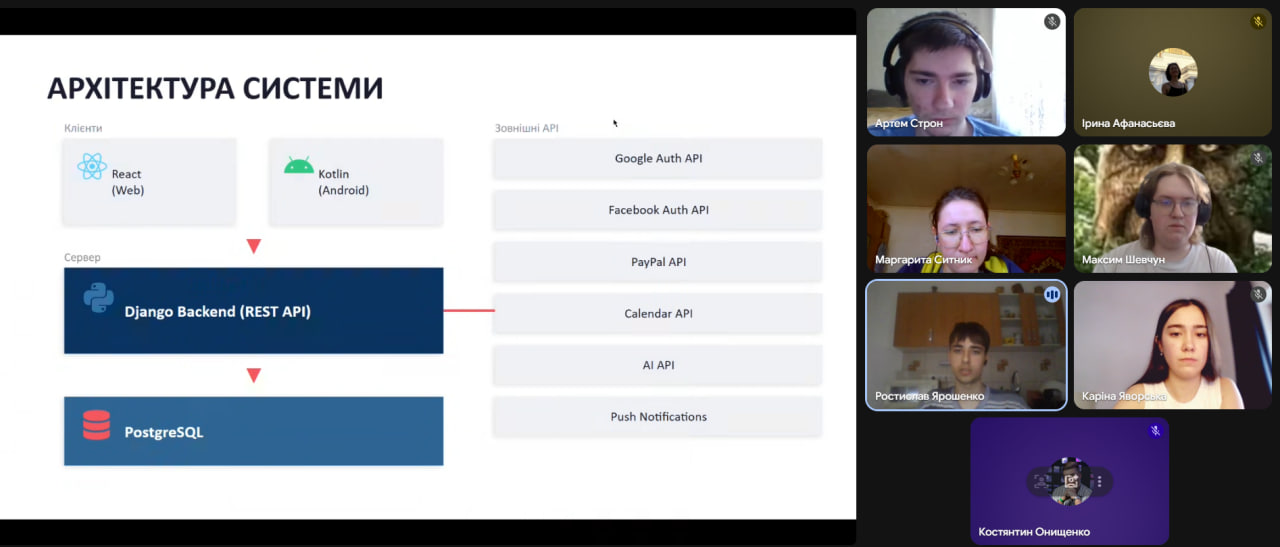
- Frontend Development: Interfaces were built using popular frameworks—React (with TypeScript and Vite), SvelteKit, Angular, and Nuxt3 (VueJS). Tailwind CSS was used for styling, while the TanStack ecosystem (Query/Router) and Axios handled state management and HTTP requests.
- Backend & Databases: The server side was developed using C# (.NET 10, ASP.NET Core), Python (FastAPI, Django), and Node.js (NestJS, Express.js). Data storage was implemented via PostgreSQL, MS SQL Server 2022, MySQL, and SQLite using modern ORMs.
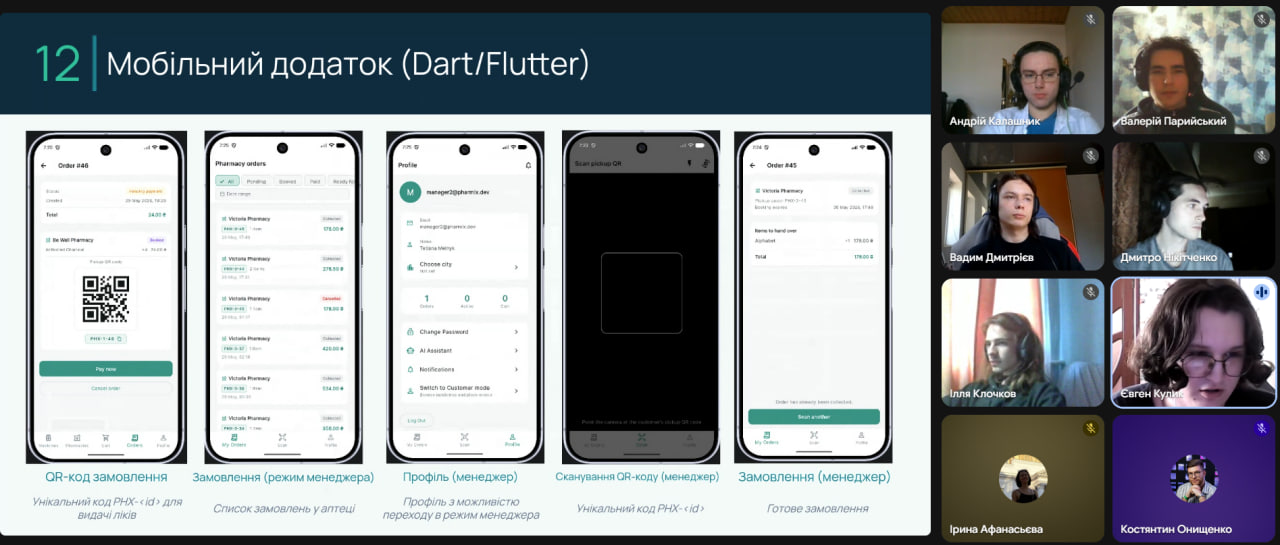
- Mobile Development: Mobile applications were developed both as native apps (Kotlin, Java, Android Jetpack, Firebase) and cross-platform solutions (React Native, Flutter).
- APIs and External Services: The projects featured complex integrations with real-world services. Students implemented AI assistants powered by the Google Gemini API and Google ML Kit. They configured payment modules via Stripe, PayPal, LiqPay, and Monobank API. Teams worked with mapping and logistics (Google Maps, OpenStreetMap, NovaPost API), integrated authentication systems (OAuth 2.0 via Google and Facebook, Clerk, Zitadel), and leveraged specialized solutions like TikTok API, YouTube API, and Steam API.
Professional Flow: GitLab, Docker, CI/CD, and Hosting
Writing code is only one part of a successful project. Mastering team development workflows and infrastructure solutions was a core focus of the course.
Students structured their workflow using the GitFlow methodology, containerized their applications with Docker, and configured Continuous Integration and Continuous Deployment (CI/CD) pipelines. The final step was hosting their completed solutions: teams successfully deployed their services to cloud environments (such as DigitalOcean), ensuring every product was fully functional and live online by the time of the defense.
All teamwork and repository management took place on NIX GitLab. Our partners provided students with exclusive access to their corporate infrastructure, allowing them to immerse themselves in a professional environment from day one.
Final Presentation: Product Demo Format
In early June, the final project defenses were held and evaluated by the course instructors, Iryna Afanasieva and Kostiantyn Onyshchenko.

The defenses followed a Product Demo format. The primary focus was on technical execution, architectural choices, and the quality of team collaboration. Teams reported on their work much like they would to Product Owners on commercial projects: they demonstrated their apps live from hosting servers, justified their technical decisions, explained their database schemas, and showed exactly how their code solves the assignment.
Partnership with NIX: Industry Feedback
The "Project Practicum" course is successfully run in cooperation with experts from the NIX IT team, keeping the curriculum highly relevant to current market demands.
Based on the defense results, the top 4 teams earned the opportunity to present their projects directly to NIX technical specialists. This is an incredible opportunity to receive professional feedback, analyze architectural choices alongside experienced developers, and take a confident step toward launching their careers.
Project-based learning is a cornerstone of training qualified engineers. This year, the teams demonstrated a deep understanding of technical workflows—ranging from generative AI integration and microservice solutions to setting up CI/CD pipelines and deploying to production servers. Crucially, students learned not just how to write code, but how to collaborate effectively within a team.
Congratulations to all teams on a successful defense! Keep pushing boundaries and continue your professional growth!